Reading Interventions for Kids Who Are Behind Grade Level
Early phonics instruction can close reading gaps before they widen.
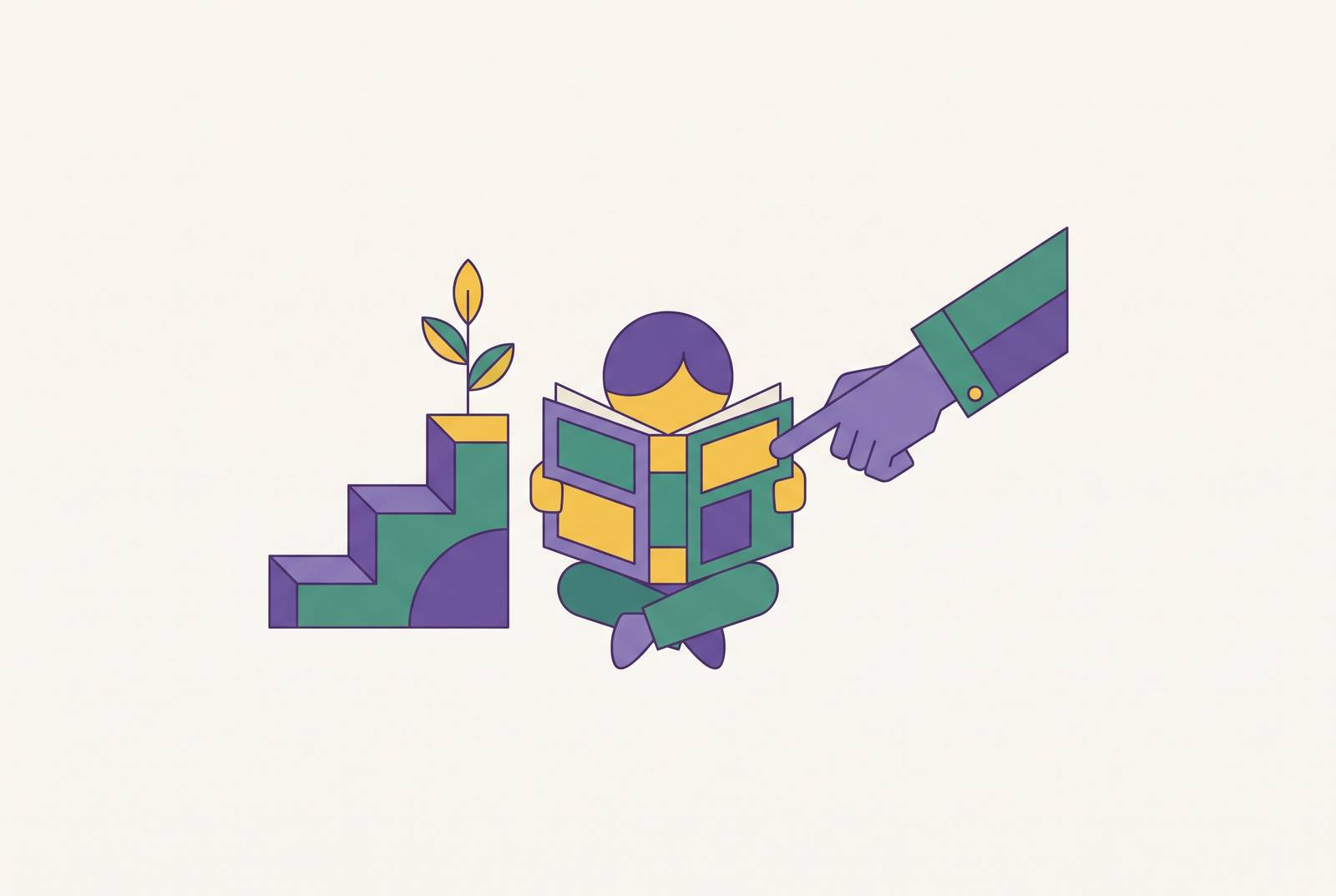
A child can look like a confident reader in kindergarten and first grade, sounding out familiar words, following along during story time, and then arrive in third grade suddenly labeled "behind." That shift feels sudden to the parents watching it happen, but a gap had been quietly forming for two or three years before it finally became visible, usually because third grade is when texts stop repeating simple, predictable patterns and start demanding real decoding under time pressure. A large share of fourth graders in the United States read below grade level, and the proportion is even higher among children from low-income families. This is a widespread pattern, affecting far more than a small number of struggling kids, built into how early reading difficulty gets identified, which is almost always too late.
The deeper issue is what happens in the years before anyone notices. A child who hasn't mapped sounds to letters reliably by the end of first grade doesn't just stay behind. That child falls further behind every time the curriculum moves forward without them. The timing of intervention matters as much as the content of it, and the rest of this piece treats timing as a variable just as important as method.
What reading requires, and where it breaks down for struggling children
Reading is a code, built from an alphabet that represents sounds, not something children pick up the way they pick up spoken language by simple exposure, and that code has to be taught explicitly or it doesn't reliably take hold. When it isn't taught directly, decoding breaks down, and once decoding breaks down, comprehension has nothing to stand on, no matter how smart or curious the child is.
The science of reading describes the full body of research behind this, drawing on cognitive science, linguistics, psychology, education, and neuroscience. Phonemic awareness, the ability to hear and manipulate individual sounds in words, and phonics, which connects those sounds to letters in predictable patterns, form the foundation. Skip or rush that foundation, and the components built on top of it, fluency, vocabulary use in context, and comprehension, become unstable.
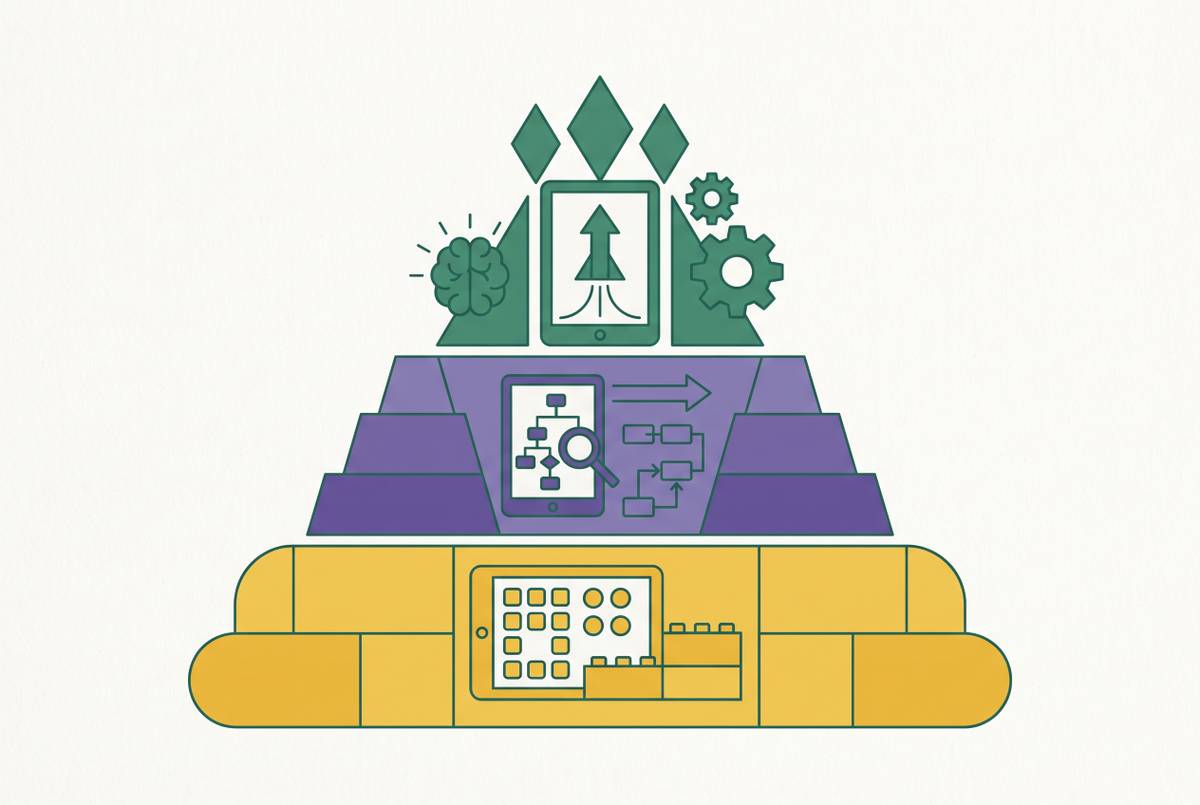
Word recognition and language comprehension work as two strands twisting together, each made of several smaller strands, all needing to strengthen over time for skilled reading to emerge. Multiplication, not addition, matters here. A deficit in either factor doesn't just lower the result, it collapses it, because a near-zero in decoding or in language comprehension drags the whole product down regardless of how strong the other factor is.
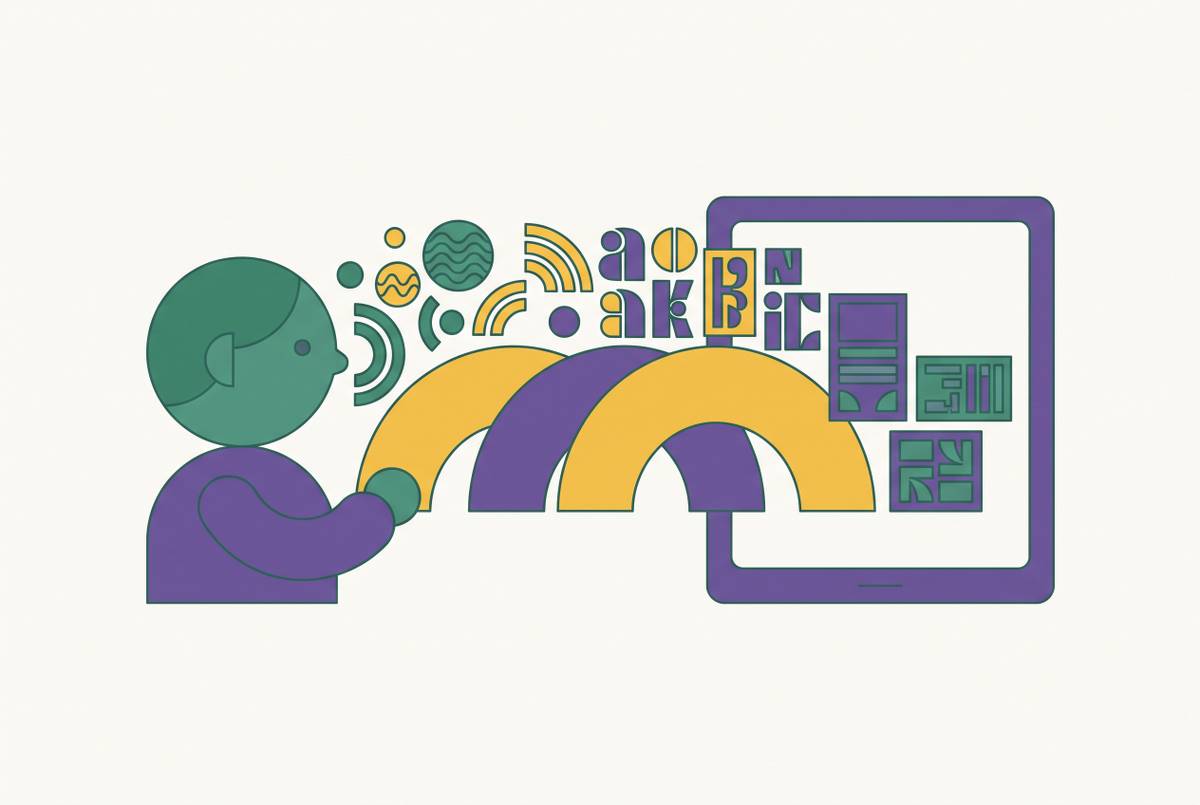
Orthographic mapping is the mechanism that produces fluent word recognition: the process of connecting letters to sounds and meaning and storing words permanently in long-term memory. Decoding is the bridge between print and spoken language. Without it, a child cannot access the words on the page at all; no amount of vocabulary or background knowledge can compensate for that.
This is where many struggling readers get missed early on. It's exactly where the gap quietly begins, often well before a teacher or parent has any reason for concern.
Explicit, Systematic Phonics Instruction as the Right Starting Point for Intervention
Decades of research converge on the same answer for children who are behind: explicit, systematic phonics instruction is what reliably teaches them to decode, not incidental exposure to books and not guessing from pictures or context. Cabell and Espittia (2025) are direct about what "explicit" means in this context: phonic skills are taught through modeling and clear explanation, and they are not expected to simply emerge over time through exposure to text.
"Systematic" carries its own specific meaning too. LiteracyPlanet's 2025 analysis describes this sequencing as giving every learner a clear, predictable pathway through the material, rather than a scattershot exposure to whatever skill a given book happens to demand.
Policy has started to catch up with this evidence. Oklahoma's Strong Readers Act, as Cabell and Espittia describe it, bans "three-cueing," the approach that encourages children to guess words from context clues or pictures rather than decode them directly. That ban reflects a research consensus built over decades, not a one-off curriculum trend.
Good phonics instruction runs in both directions: it includes spelling, not just reading, because connecting phonemes to graphemes both ways strengthens the orthographic mapping that makes words stick in memory. Decodable texts, sequenced to match exactly what a child has already been taught, let practice reinforce instruction instead of throwing children into patterns they haven't learned yet.
The strongest objection to a phonics-first approach is a fair one: narrowing instruction to decoding alone risks producing children who can read words aloud without understanding what any of them mean. That concern deserves a direct answer, and it gets one in the next section.
Phonics as the Floor, Not the Ceiling, for Intervention
Phonics is the necessary starting point for a child who is behind, but it is not the finish line. Effective intervention builds fluency, vocabulary, and language comprehension on top of decoding, because decoding is what lets a child access words on a page, not what makes those words meaningful.
NWEA's analysis is direct about where the balance shifts: once a child has strong word decoding skills, growth in reading comprehension becomes more dependent on language, including vocabulary and knowledge. That means intervention has to address both strands eventually, not camp out indefinitely on phonics once decoding has taken hold. Cabell and Espittia point to interactive read-alouds, paired with explicit vocabulary instruction and strategic classroom conversation, as a way to build language comprehension even in children who aren't yet reading fluently on their own.
Researchers have flagged a real risk in how schools sometimes implement this science: treating the Science of Reading as a box to check, buying a program, running a set of discrete phonics lessons, without building the broader system around it, will not produce better readers over time. Phonics-first describes a sequence, not an exclusive focus. It means decoding gets addressed first when decoding is the bottleneck, and vocabulary, fluency, and comprehension get layered in as decoding strengthens, not ignored until some arbitrary mastery point.
Written language itself demands direct teaching beyond phonics. Fluency works as the connective tissue between decoding and meaning: when decoding becomes automatic, a child's limited cognitive energy shifts toward understanding what the words say, and when fluency stays weak, comprehension suffers even in a child who technically knows every letter-sound rule.
The earliest point to catch any of this is before formal reading instruction even begins. For Pre-K and kindergarten children, phonemic awareness and alphabet knowledge are the leading indicators of future decoding difficulty, which makes screening for those two skills, before a child is ever labeled a struggling reader, the earliest possible point to intervene.
How timing and intensity decide whether intervention works
Phonics-grounded instruction can be designed exactly right and still fail to close a reading gap if it arrives too late or isn't delivered intensively enough. The research on intervention outcomes points the same direction every time: earlier and more intensive support produces larger, more durable gains than later or lighter support.
Research reviewed by IMSE found that children who receive intervention in earlier grades make greater gains than children who first receive support later, and they keep developing skills faster even after the intervention itself has ended. Intensity follows a clear hierarchy, too. Across studies on comprehension instruction in grades K through 3, the Kentucky Reading Research Center found that Tier 3 interventions, the most intensive and individualized, produced the strongest gains, with Tier 2 next and Tier 1 behind that. Differentiation by student need is part of what makes the instruction work.
The tiers themselves describe a real escalation in intensity. Tier 1 is quality whole-class instruction every student receives. Tier 2 adds small-group, targeted support for students who need more. Tier 3 is intensive, individualized instruction, often delivered one-on-one. A child who is behind grade level typically needs Tier 2 support at minimum, and a meaningful number need Tier 3.
The payoff for getting this right is substantial. But the gains need upkeep. A 2026 fluency intervention study found some maintenance of gains after the intervention ended, though fluency outcomes weren't any more consistent across students than comprehension gains were, and both showed uneven results from child to child. Comprehension in particular looked like it needed sustained, ongoing support. A six-week reading program and ongoing adaptive instruction are not the same thing. Duration and continuity are part of what makes intensity actually translate into lasting gains, not just a short-term bump.
Delivering Instruction That Meets Each Child Where They Are
Children behind grade level don't arrive at that label through the same path. One child might have strong phonemic awareness but struggle specifically with phoneme-grapheme mapping. Another might decode words adequately but lack fluency. A third might still be in the pre-alphabetic stage described earlier, not yet grasping that letters map to sounds. The same lesson plan cannot serve all three of these children well, which is the core challenge every intervention program has to solve.
Research on personalized learning describes adaptive instruction as continuously adjusting content, pace, and difficulty based on what a learner demonstrates, not placing a child at a level and leaving them there for a fixed stretch of weeks. That kind of adjustment depends on formative assessment, the ongoing, low-stakes checking of what a child actually knows and can do. Without it, even a well-designed curriculum ends up teaching a hypothetical average child instead of the specific one sitting in front of the material.
One-on-one instruction remains the clearest way to deliver this kind of responsiveness. A skilled teacher sitting beside a child can hear a decoding error, figure out in the moment whether it traces back to a phonemic awareness gap or a phonics gap, and adjust the next question accordingly. Most families don't have reliable access to that kind of instruction. Private tutors and reading specialists require resources many families simply don't have, which leaves a gap between what the research says works best and what's actually available to most struggling readers.
AI purpose-built for early literacy instruction can close part of that gap by replicating the one-on-one dynamic at scale. Ello, an AI reading app built on the Science of Reading, listens to a child read aloud, identifies where decoding breaks down, and adjusts instruction moment to moment based on what that specific child demonstrates, grounded in a curriculum built by teachers and subject-matter experts for this purpose. The distinction that matters here is between a tool that tracks quiz scores and adjusts difficulty based on right or wrong answers, and a tool that listens to a child's voice, understands the specific nature of a reading error in real time, and decides what to teach next. The first is adaptive testing. The second is adaptive instruction, and it's the second kind the research on timing, intensity, and individualized support actually calls for.
What reading apps help kids who resist reading or learn differently
Parents are not bystanders in this process. The research consistently shows that parental involvement and consistent home practice amplify whatever gains a child makes from formal instruction at school. Once a struggling reader has been identified, the first step for a parent is finding out exactly where the child stands, not accepting "behind grade level" as a vague label but learning which specific skills are weak, phonemic awareness, particular phonics patterns, fluency, or vocabulary, since each of those deficits calls for a different response. Parents are entitled to see the school's early literacy screening data, the assessments that measure the specific pre-reading and foundational skills known to predict reading success, along with a clear answer about which tier of support their child is receiving.
At home, the practices best supported by the research are also the simplest to put into practice. Using decodable books that match what a child has actually been taught lets practice reinforce real progress instead of inviting guesswork with books full of patterns they haven't learned yet. Consistency counts for more than length of session: short, daily practice holds onto skill-building momentum in a way that occasional, longer sessions don't, and it prevents the regression that occurs over summers and long breaks.
A child's resistance to reading is a signal worth paying attention to. Finding the right level and building up from there does more good than pushing a child through frustration at a level they're not ready for.
For parents considering a reading app or program on top of what school already provides, a few direct questions cut through most of the marketing noise: does the tool teach, or does it test? Does it listen and respond to a child's actual reading, or does it just present content and score answers? Does it build the foundational skills the Science of Reading identifies, phonemic awareness, phonics, fluency, vocabulary, and comprehension, or does it quietly reward guessing and pattern-matching instead? Ello answers those questions by design: available on iOS and Android, with free daily activities and a subscription for full access, it's built specifically for children ages 4 to 9 and listens to each child's voice in real time. It teaches phonics and foundational reading skills through a Science of Reading curriculum, adapts to exactly where each child is, and gives parents progress reporting that keeps the connection between home and school visible.