Phonics Decoding Apps That Build the Sounds-to-Print Bridge for Kids With Language-Based Learning Disabilities
Three evidence-based apps teach the sound-to-print connection kids with dyslexia need most.
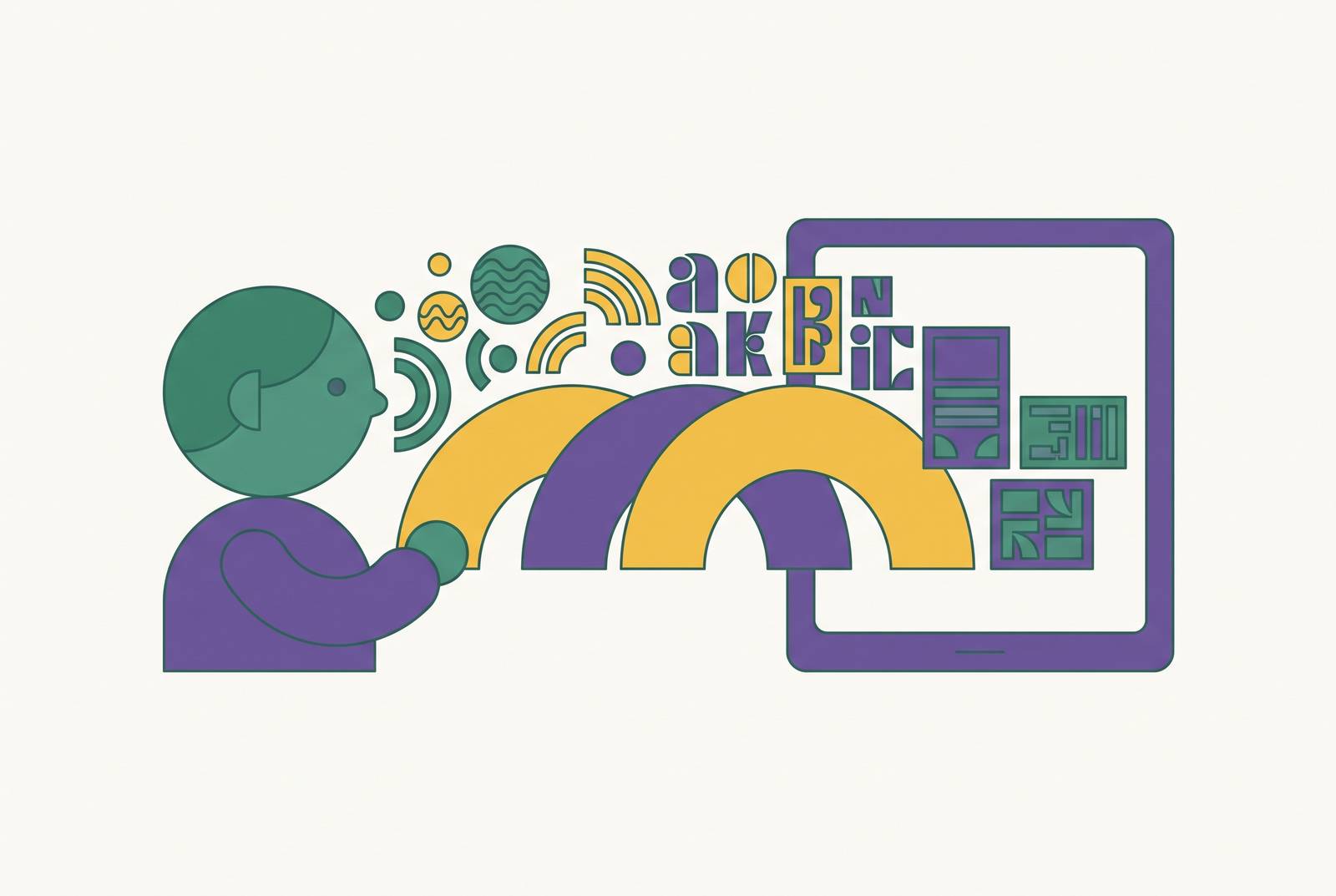
For kids with dyslexia or other language-based learning disabilities, a useful reading app must teach the sounds-to-print bridge. GraphoGame has randomized controlled trial evidence for early word-reading gains, while Nessy supports structured home practice and Ello adds real-time feedback on spoken reading. What matters most is that the app has explicit phonics and cumulative lessons, and that children move ahead based on mastery. Apps supplement specialist instruction.
Why most reading apps fail children with language-based learning disabilities before the child ever opens a book
Children with dyslexia often struggle to learn how written letters map to speech sounds or to use those connections when they read words. That is the broken sounds-to-print bridge. For children with language-based learning disabilities, or LBLDs, reading failure is not simply a lack of motivation or exposure. More time with books does not, by itself, teach a connection the child cannot reliably make.
Most consumer reading apps were built for children already on track who need practice. For a child with an LBLD, activities that permit picture guessing, word-shape memorization, or skipped sounds can reinforce the wrong habits. The meaningful contrast is not between entertaining and serious-looking apps, but between bypassing decoding and teaching it. An AI teacher built around structured literacy, such as Ello, teaches that connection through explicit phonics and adapts in real time, instead of adding help to reading activities made for children in general.
Why early identification matters more for LBLDs than for any other reading difficulty
The longer a decoding difficulty goes unsupported, the harder intervention becomes. Children who are not reading proficiently by the end of third grade face sharply worse long-term academic outcomes. That makes early action important, but it is not a reason for parents to blame themselves. Focus on what instruction the child can receive now.
Girls are especially vulnerable to delayed support because they are systematically under-identified. Population research finds roughly twice the diagnosis rate in boys, a pattern that appears to reflect greater variance in male reading performance rather than a genuine difference in how often dyslexia occurs. A diagnosis should not be the gatekeeper for teaching. Families can use Ello for free on iOS and Android to get structured phonics before a diagnosis, as long as the child can already decode basic words. Whether a child has a confirmed LBLD or shows early signs of risk, the child needs to be taught with explicit, systematic phonics.
What structured literacy actually requires, and why it is the only evidence-based answer for the broken bridge
Structured literacy gives parents a clear way to judge how an app teaches. The Science of Reading identifies five key skills, namely phonemic awareness, phonics, fluency, vocabulary, and comprehension. For children with LBLDs, the critical entry point is awareness of speech sounds and their links to print. A 2025 meta-analysis of spelling interventions for students with or at risk for learning disabilities found a statistically significant positive effect on word-reading only for phonemic, or phoneme-to-grapheme, approaches.
The first test is whether the app teaches directly. Explicit instruction names the rule. Systematic instruction teaches skills in a planned order without leaving gaps, while cumulative instruction goes back over earlier skills as it adds new ones. Multisensory work links seeing, hearing, saying, and tracing letters, so children do more than learn to recognize letters by sight. A collection of phonics games does not necessarily meet these requirements.
The next test is mastery gating. Children advance only after demonstrating understanding. Moment-to-moment adaptation matters here because finishing an activity is not the same as learning its content. Orton-Gillingham is one of the oldest and most influential structured literacy approaches for LBLDs, though research has not established it as superior to other structured literacy methods. Its name is therefore less important than the instruction an app actually delivers. That instruction also needs decodable texts containing the sound-letter patterns already taught, rather than leveled readers that require guessing at untaught patterns.
The honest case for and against apps as intervention tools for LBLDs
The strongest reason for caution is that an educational appearance says little about instructional quality. Furlong et al., 2025 found that only a minority of foundational literacy apps reached a good app-quality score. A practice app may make repetition more appealing without teaching the reading code. An intervention app must have explicit, cumulative lessons and let children move forward only after they show mastery.
There is also a genuine case for using apps, because randomized controlled trials have found decoding benefits from tools built for that purpose. A 2025 systematic review found that dyslexia was the most commonly studied learning disability category for AI-based interventions, with personalized or adaptive learning systems the most common intervention type. But research activity is not proof that an app can replace a practitioner. No app currently on the market has been validated as a standalone replacement for structured literacy therapy with a trained practitioner. The defensible role is to extend practice between school or tutoring sessions.
GraphoGame and what the RCT evidence actually shows
A randomized controlled trial with first- and second-grade students at risk for dyslexia found greater improvement in familiar-word reading after GraphoGame than after traditional non-computerized support or computerized math training. A study of its GG Rime version found medium-to-large gains in reading and large gains in spelling over 12 weeks. Phonological awareness and nonword reading showed the largest gains. Those are meaningful results for a tool aimed at building the sound-letter connection, though they do not make it a complete intervention program.
Originally developed in Finland, GraphoGame uses game-based letter-sound matching and adjusts difficulty as the child progresses. It has been used in both high-income and lower-income countries, with evidence spanning reading difficulties of environmental or genetic origin. Its clearest fit is early readers ages 5–8 who need foundational phoneme-grapheme work. Among these options, it has the most extensive validation for struggling early readers. For older children with entrenched decoding difficulties, its early word-reading evidence does not remove the need for more intensive structured literacy instruction.
Nessy and Orton-Gillingham principles in an app children actually use
Children who need repeated practice may resist anything that feels like more drill. For ages 5–12, Nessy combines sequenced lessons with interactive games covering phonics, spelling, vocabulary, and comprehension. Its Structured Literacy principles are informed by Orton-Gillingham methodology, making it a useful home-practice companion for children working with a tutor or specialist. It also performed strongly in independent app-quality appraisal.
Studies report that it helps children with word reading and spelling accuracy, as well as their motivation and engagement. However, the same research raises concerns about declining intrinsic motivation over time and the need for sustained support to develop fluency. That is a reason to monitor whether the child remains engaged. Long-term evidence is still limited, so initial gains should not be treated as proof that benefits will persist. Nessy is a practice commitment to oversee.
OG Star for families already working within an Orton-Gillingham framework
OG Star fits families who already have an Orton-Gillingham plan and want home practice that reinforces it. Its structured phonics lessons, interactive activities, and built-in tracking support multisensory learning within that framework. Progress tracking helps parents see which skills have been practiced and at what level, which matters when coordinating with a tutor. It is for children from preschool through 8th grade, roughly ages 4–14. The evidence base is thinner than for GraphoGame or Nessy, so its strongest position is as a reinforcement tool for work with an OG-trained practitioner.
Lively Letters-Phonics when speech-sound processing is part of the difficulty
Some children struggle not only to connect sounds with letters but also to perceive or produce the sounds themselves. Lively Letters-Phonics addresses that overlap through work on phonemic awareness, phonics, and speech production. A speech and language pathologist developed it with three teaching activities based on the Lively Letters research-based program. Its multisensory approach includes hearing, speech production, and recognizing written letters.
That makes it a distinct option for children whose screening or speech-language evaluation has identified phoneme perception or production gaps. It is also a natural companion for a child already working with a speech and language pathologist. The fit comes from that specific need, not from a claim that it covers every part of reading. Its narrower scope means it belongs alongside a comprehensive phonics sequence as a supplementary intervention.
Read Genie and Whizzimo for structured practice and teacher-customized instruction
Read Genie serves families who need short, guided phonics practice at home. It uses structured phonics and multisensory activities to support reading and spelling. The bounded sessions suit children who find extended practice difficult because of attention or stamina. It is available on Android and iOS, with iOS 15.1 or later required. Its practical role is manageable daily reinforcement for early readers.
Whizzimo serves the other side of that distinction. It is a customizable digital platform for multisensory reading and spelling instruction, compatible with iPad and requiring iOS 6.1 or later. A tutor or specialist teacher can build lessons around what the child is currently learning and use digital manipulatives in remote or hybrid instruction. That flexibility depends on adult expertise to configure it well.
What Ello adds that phonics-focused LBLD apps typically lack
Ello listens to the child’s voice during reading, responds to what it hears, and adjusts instruction moment to moment. That listening layer differs from adapting difficulty after a letter-matching activity or following a preset sequence of games. Its curriculum is grounded in the Science of Reading and was built by teachers and subject-matter experts for early literacy. For a child who is behind and reluctant to practice, responsive pacing and feedback address both the reading task and the difficulty of staying with it.
Its fit still has boundaries. Ello is built for ages 5–9 and is not suitable for pre-readers who cannot yet decode basic words. Parent progress reports show what the child is practicing and where they are struggling, giving families information to use with school or tutoring support. It is free to use, with an optional paid Ello Unlimited upgrade. It adds responsive reading practice, but it does not have LBLD-specific clinical validation as a replacement for an OG specialist or other trained practitioner.
What reading app fits a child with dyslexia or a specific decoding difficulty?
Start with the child’s decoding profile. For an early reader who needs basic sound-letter mapping, the trials give the clearest support for choosing GraphoGame. If the child can decode basic words but needs help that responds to how they read, Ello adds voice-based feedback. Neither an age range nor a diagnosis alone establishes readiness, and Ello’s basic-decoding requirement rules it out for pre-readers. For children who already get structured instruction from a specialist, Nessy or OG Star can keep practice at home in line with that teaching.
A different barrier calls for a different tool. Lively Letters-Phonics fits identified speech-sound perception or production gaps, while Read Genie fits short, guided daily practice. Whizzimo fits a teacher or tutor who needs to customize multisensory lessons. Across these choices, watch whether accuracy and understanding determine advancement independently of a timer or a fixed number of attempts. Finally, pair app practice with decodable books that use the patterns the child has been taught, because gains made on a screen may not carry over to reading on a page without that step.