How AI Tutors Adapt to Individual Children in Real Time
AI tutors use voice and performance data to adjust lessons moment-to-moment for young learners.
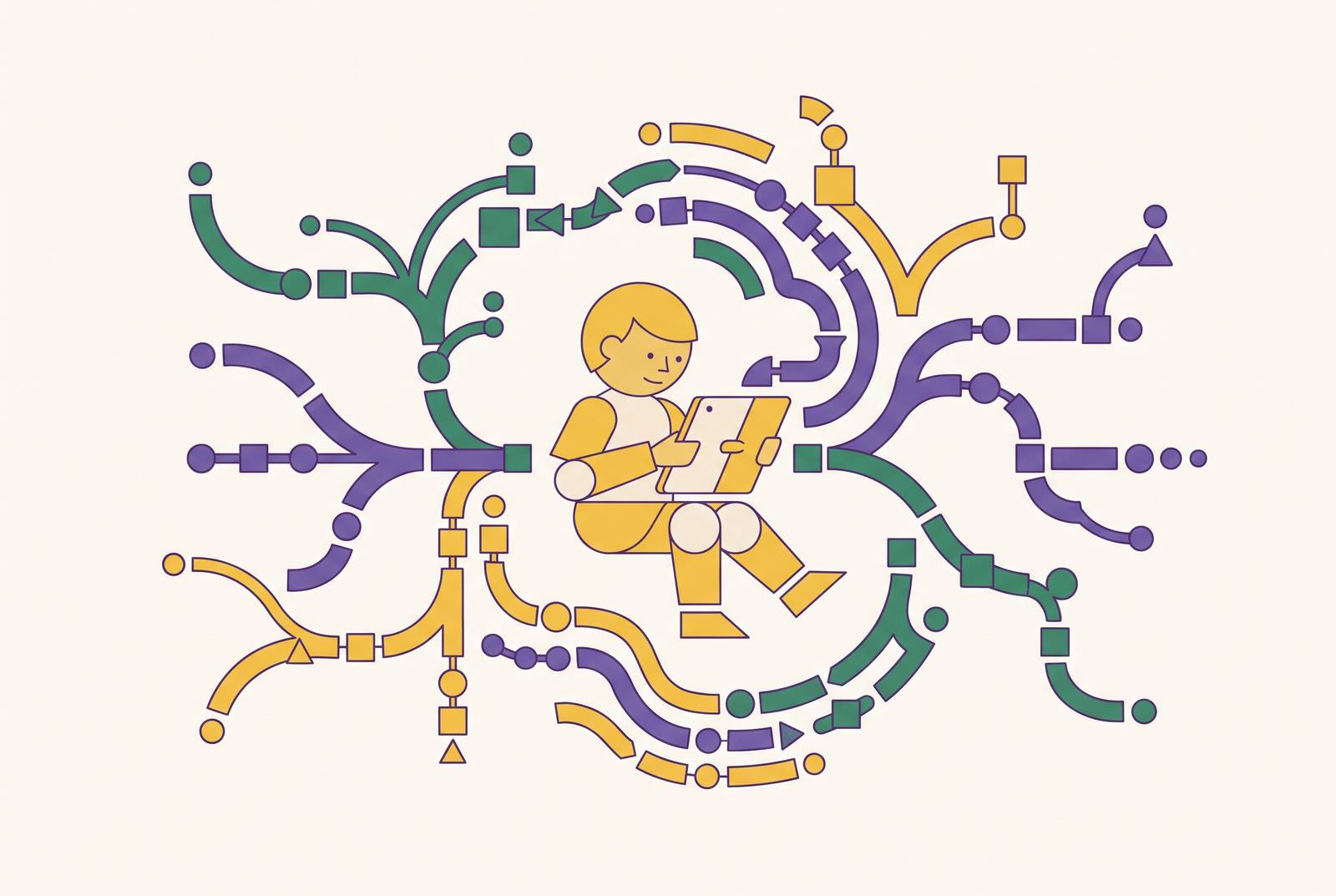
AI tutoring in 2026 covers a wide range of products, from simple quiz apps that reshuffle flashcards to systems that hear a child read out loud, catch a mispronounced vowel, and shift their tone based on frustration in the child's voice. The thesis here is simple: real-time adaptation is a loop, listening, interpreting, responding, that has to run continuously and has to be built around how a specific child, in a specific moment, understands or fails to understand something. It's a loop, listening, interpreting, responding, that has to run continuously and has to be built around how a specific child, in a specific moment, understands or fails to understand something. For kids ages 4 to 9, that loop looks nothing like it does for a teenager typing into a chat window, and the difference affects how consistently the child stays engaged and how accurately the system can respond to them.
What Benjamin Bloom's 2 Sigma finding still tells us
Benjamin Bloom published a finding in 1984 that education researchers still cite as a kind of north star. Students who got one-on-one tutoring scored two full standard deviations higher than students in a standard classroom. The average tutored kid outperformed 98% of kids who weren't tutored. Bloom called it the "2 Sigma Problem," and the name stuck because the problem itself never went away: nobody disputed the result, but nobody could afford to put a personal tutor in front of every child either. The economics didn't work. They still mostly don't.
What makes one-on-one tutoring so effective isn't mysterious. A human tutor sees the confused look on a kid's face and responds to it right then, not three days later when a quiz comes back graded. They try a second explanation when the first one doesn't land. They remember, without needing a spreadsheet, exactly where the child got stuck last Tuesday. They set the pace to match the one kid in the room.
Bloom was describing behavior, not mechanism. He had no way to anticipate voice recognition models, neural networks, or language models that can generate a fresh explanation in under a second. The open question in 2026 isn't whether one-on-one tutoring works, that was settled forty years ago. It's which of those specific tutor behaviors, the noticing, the re-explaining, the remembering, AI can now actually replicate at scale.
The continuous loop: how knowledge tracing and real-time signals work
Adaptive platforms run on something called knowledge tracing, which is more granular than most people assume. The system isn't just logging right or wrong. It's tracking response time, the specific type of error made, and whether the child corrected the mistake on their own or needed a hint.
Multiply that across thousands of small interactions to get a probabilistic map of what a child actually knows. That map is far more detailed than anything a standardized test could produce, because a standardized test is a single snapshot, while knowledge tracing is closer to a continuous recording.
The more advanced systems pull from several data streams at once: clickstream data, time spent on each task, streaks of correct or incorrect answers, and in some cases voice patterns or other physiological signals. Some platforms adjust difficulty on the fly by combining multiple performance signals, so the child stays challenged without getting discouraged. Listen, interpret, adjust, and then listen again forms that loop. Listen, interpret, adjust, and then listen again.
Why young children ages 4 to 9 present a distinct set of sensing challenges
The age of the child changes everything about how that loop has to work. A ten-year-old can type "I don't get it." A six-year-old often can't articulate confusion at all, and definitely can't type fluently enough to make text-based interaction the primary channel. Attention spans at this age are short and unpredictable, so a system built for teenagers or adults simply won't pick up the right signals.
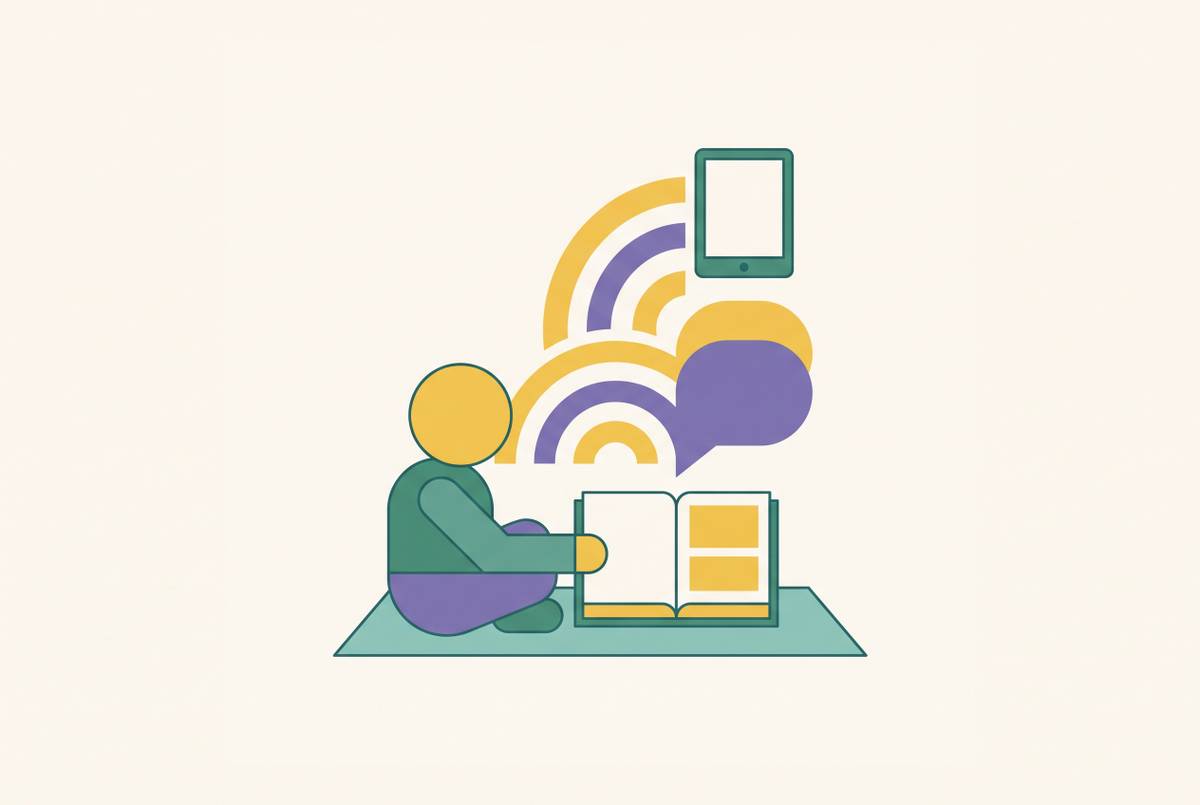
Voice becomes the main channel that actually works for this age group. That creates a specific technical demand: the system has to hear a child read aloud and catch errors down to the level of an individual phoneme. Voice recognition tuned for adult speech doesn't transfer well, since children's pitch, articulation, and vocabulary differ substantially from grown-up speech patterns. Systems built for this age group need voice recognition designed specifically for how kids talk, not adults, and need to handle children's data under COPPA rules given the age of the users.
Reading instruction adds another layer of difficulty on top of the challenge of interpreting a child's voice. A young reader isn't decoding fluently yet, so a wrong answer could mean several different things. Did the child misread a phoneme? Did they read the word correctly but not know what it means? Or did they read it accurately, just too slowly for the meaning to stick? Those are three different problems requiring three different responses, and a system that can't tell them apart is guessing.
The Science of Reading gives a pedagogical map for exactly this. Five pillars, phonemic awareness, phonics, fluency, vocabulary, and comprehension, each produce a distinct error signature. A well-built system needs to recognize which pillar a mistake belongs to before it can respond usefully.
What the evidence shows about outcomes
The strongest data point so far comes from a Harvard University physics study, which found students using AI tutoring systems learned more than twice as much, in less time, compared to peers in traditional active-learning classrooms. Researchers have flagged it as one of the more significant controlled studies on AI's instructional impact to date.
Younger learners show similar patterns. Stanford Graduate School of Education research tracked 4,200 students ages 6 to 11 using an adaptive math platform over two school years. Kids using the adaptive system gained 1.4 grade levels of extra progress compared to peers getting traditional instruction, and the biggest gains occurred in kids who had struggled the most beforehand. That last detail matters: the tool did the most good for the kids furthest behind, not the kids already ahead.
A separate survey from AIPRM found a 62% jump in test scores among students in one country using AI-powered instruction. students using AI-powered instruction, attributed to the system's ability to catch knowledge gaps early, before they snowball into bigger problems.
None of that settles the question completely, though. A 2025 meta-analysis of 73 studies found AI tutors beat control conditions in 84% of cases, but the size of the effect ranged from barely noticeable to very large. Design quality, the age of the child, and how involved parents were all shifted the outcome. Researchers and education policy experts have gone further, raising concerns that open questions around cognitive development, creativity, and social-emotional growth deserve serious attention before broad adoption. Cognitive offloading, where a kid leans on the tool instead of building the underlying skill, remains a live and unresolved concern. More research specific to K through 8 education is still needed before anyone can call this settled.
How reading and early math development each require a different kind of adaptation
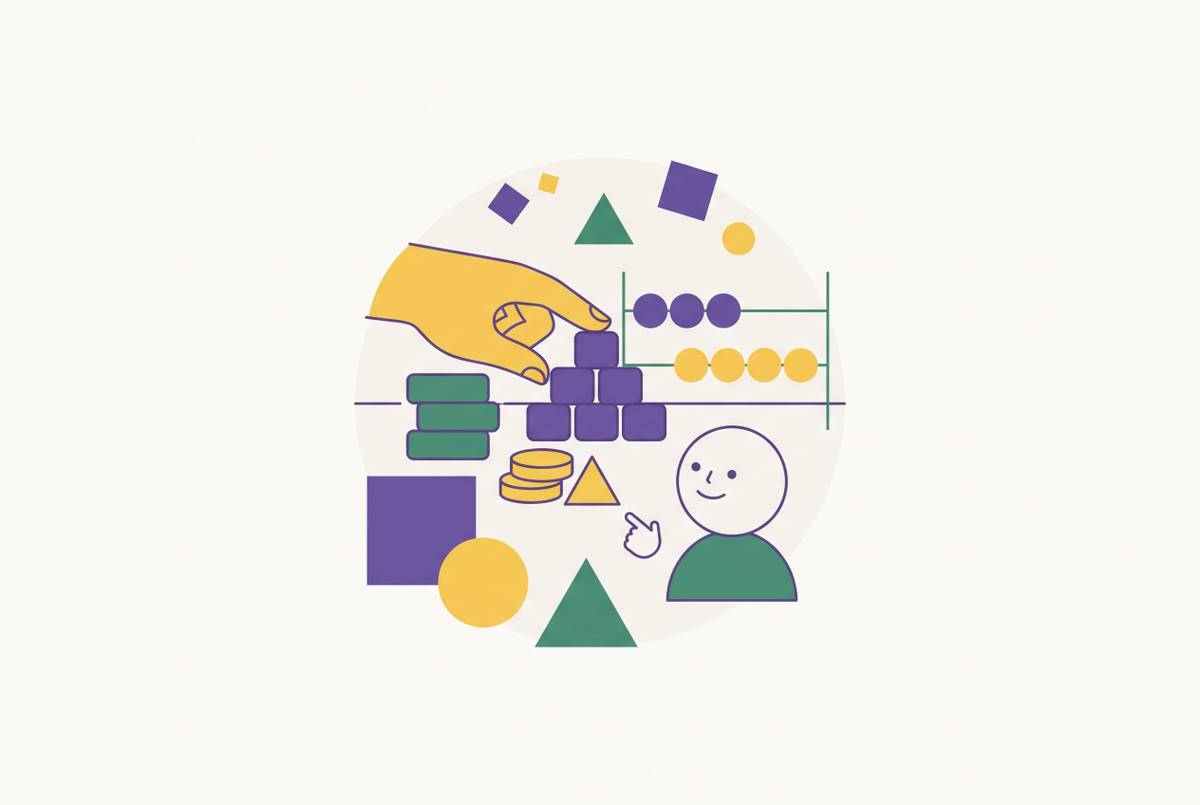
Reading and math don't adapt the same way, and treating them as interchangeable is a mistake. Reading development follows a strict sequence: a child has to hear and manipulate sounds before those sounds connect to printed letters. Only once decoding becomes accurate and mostly automatic can attention shift over to vocabulary and comprehension. Skipping a step causes the foundation underneath to crack later, even if the child seems to be keeping up in the short term.
Reading research has consistently identified systematic phonics instruction, a planned, deliberate sequence both across skills and within them, as the approach that actually improves reading comprehension over the long run. An AI tutor that rushes or skips that sequence undermines the thing it's supposed to be building. It's undermining the thing it's supposed to be building.
The stakes here aren't abstract. Mississippi passed evidence-based reading legislation in 2013 and moved from 49th to 21st in national reading rankings within six years. Forty states have passed similar Science of Reading legislation since 2019, so the research base isn't up for debate anymore. Meanwhile, national reading performance remains a pressing concern across grade levels. The status quo is slipping, so getting the adaptation right matters right now, not eventually.
A tool that adjusts difficulty differs from one that teaches.
Adjusting difficulty after a wrong answer is pattern matching: the child got it wrong, so make the next one easier, which falls short of teaching. That's pattern matching: the child got it wrong, so make the next one easier. Fine as far as it goes, but it doesn't ask why the child got it wrong in the first place.
Actual teaching means diagnosing the wrong answer before responding to it. Was there a missing prerequisite? A rule applied in the wrong context? A fluency gap that has nothing to do with understanding? The response should change depending on the answer to that question, whether that means a different explanation, a different mode (voice instead of text, a picture instead of a sentence), or a step backward to a concept the child hasn't actually locked in yet.
Rajen Sheth, CEO of Kyron Learning, put it this way: instruction doesn't have to be confined to set moments anymore. It can respond as learning happens, guiding a student through their own thinking in real time rather than waiting for a scheduled checkpoint. Conversational tutors add something quiz-based systems can't offer at all, the ability for a child to ask "why" or "how" as many times as they need, without the embarrassment of asking a teacher or a classmate for the fifth time.
What parents should look for when evaluating an AI tutor for a young child
The right question isn't whether an app is popular or whether a kid seems to enjoy it. Plenty of things hold a four-year-old's attention for twenty minutes without teaching them anything. The better thing to ask: what is this system actually doing with what a child says and does?
A few concrete things to check before trusting a tool with a young reader or early math learner:
- Does it listen to the child's actual voice in real time, or only accept taps and typed text? For young children who cannot yet type fluently, voice is the most practical channel for real reading instruction.
- Is the curriculum built on an established framework, Science of Reading for literacy, Common Core alignment for math, or is it just content stitched together without a pedagogical backbone?
- Does the system tell error types apart, or does it just count right and wrong? A tool that responds differently to a phonemic awareness slip than to a comprehension gap is doing something fundamentally different from one that just makes the next question easier.
- Does it adapt within a single session, not only between sessions? Real-time adaptation means the fifth wrong answer in a row gets a different response than the first one did.
- Does it give parents specific, usable progress information, which concepts are solid and which need more work, rather than a vague star rating or a generic score?
- Is it built from the ground up for young children, or is it a general-purpose AI tool wearing a cartoon skin? COPPA compliance, voice recognition tuned for kids' speech, and no ads or in-app purchases aren't nice-to-haves at this age. They're the floor.
Sources
- Designing the 2026 Classroom: Emerging Learning Trends in an AI-Powered Education System - Faculty Focus | Higher Ed Teaching & Learning
- How AI is Transforming Learning for Kids in 2026
- Scalable AI tutoring: how AI solves Bloom's 2 Sigma problem — AWorld Magazine
- Finally Solving the 2-Sigma Problem? AI's Answer to Personalized Learning
- en.wikipedia.org
- edweek.org
- brookings.edu
- etcjournal.com