Object Permanence and Its Role in Early Math Cognition
Babies' ability to imagine hidden objects seeds the mental skills needed for math years later.
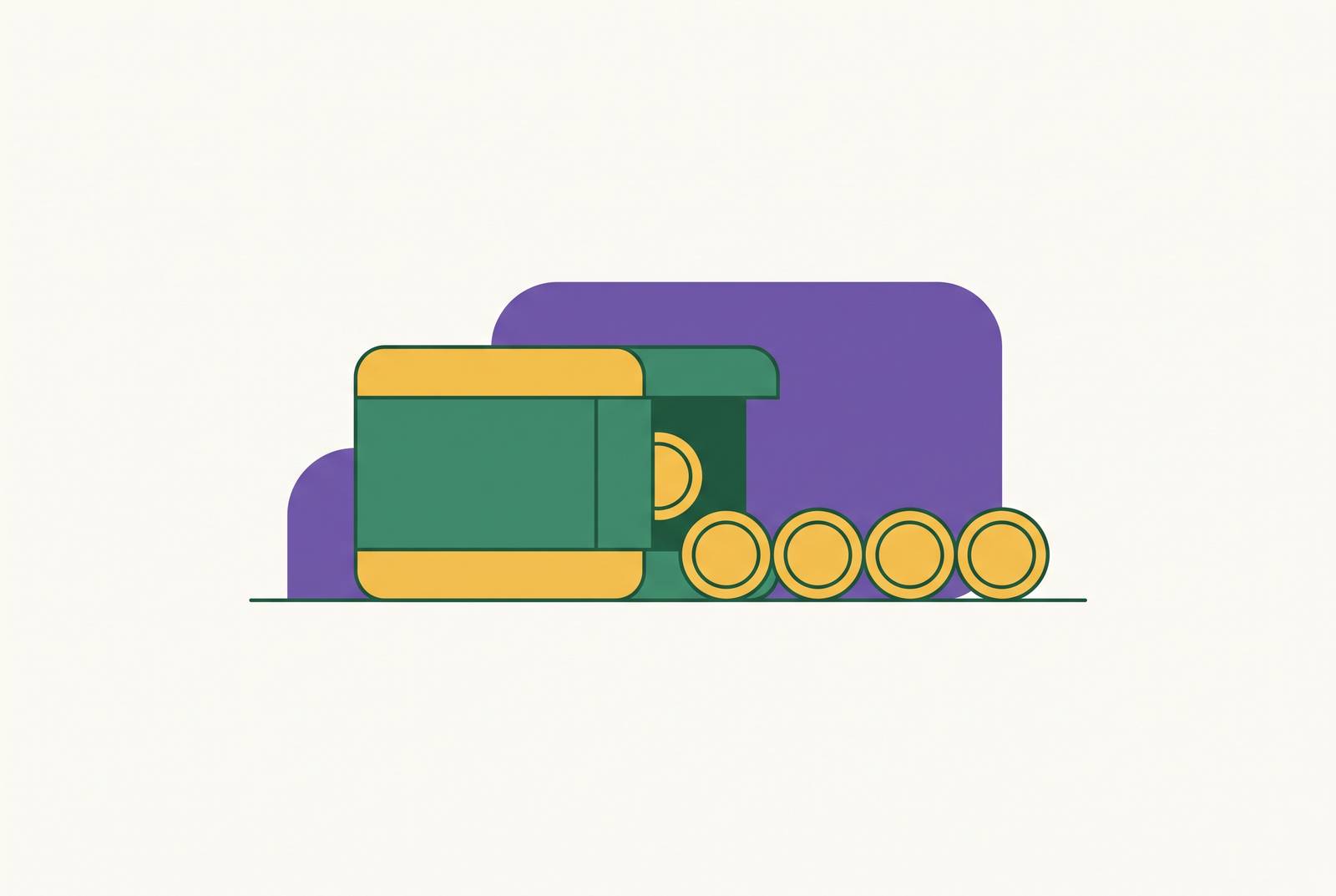
A six-month-old who watches a toy vanish under a blanket and does nothing has, for decades, been read as a child with no concept that the toy still exists. That reading is only half right. Object permanence, the understanding that things persist even when they're out of sight, is the starting point for something much bigger: the ability to hold a mental image of something absent and reason about it. That single capacity is the root system underneath number sense, quantity reasoning, and math thinking that shows up years later, well into the 4-to-9 age range: it produces those later abilities, and research into early cognitive development points toward the connection.
The first step toward mental representation: object permanence
Jean Piaget put the object permanence milestone at around nine months, and his six sensorimotor substages still hold up decades later as a rough map of how infants move through this period. What hasn't held up is his sharper claim, that infants under eight months carry no representation of a hidden object.
Looking-time studies complicate that picture substantially. An infant three or four months old shown a scene where a hidden object behaves in a way it shouldn't looks longer, as if surprised. That's a structured expectation about something unseen, months earlier than Piaget's timeline allows. A 2024 pupillometry study found responses consistent with object permanence in infants at 10 and 12 months, adding to a growing pile of non-search-based evidence that knowledge arrives well before a baby can act on it.
The gap between what an infant knows and what an infant can demonstrate comes down to a mismatch in what the two methods actually demand. Manual search, reaching under the blanket, requires memory, inhibitory control, and enough motor coordination to execute the reach. Looking requires none of that. It only requires noticing that something is off. The A-not-B error appears in infants aged 8 to 10 months: they'll reach for an object at its old hiding spot instead of the new one, because memory and inhibition haven't caught up to what the infant already, in some sense, knows.
That gap matters because it reframes object permanence as a developing capacity for representation. And representation is the whole point. Three things get built here: recognition that objects don't blink out of existence when unobserved, an understanding of how objects behave in space even when out of view, and the ability to infer where a hidden object must be without watching it get there. Piaget called the shift that follows the move from sensorimotor to preoperational thinking. Reacting to what's in front of you and thinking about what isn't are two different things.
Object permanence also functions as one of the earliest forms of working memory. Holding the image of a hidden object in mind, long enough to act on it, is functionally the same operation as holding a phone number in mind while dialing it. The content is simpler in infancy, but the mechanism is the same one that gets recruited for algebra twenty years later.
The link between working memory, seeded by object permanence, and number sense
Working memory is the engine behind picking up new information and new skills generally, and it's been linked to both early literacy and early numeracy in kindergarten, then to broader academic performance in both math and language as kids get older.
A University of Haifa study, covering 250 kindergartners and 150 first-graders, found that simple working memory drives early numeracy at the kindergarten stage, while complex working memory (the kind that involves manipulating information, not just storing it) becomes more important by first grade, across both math and language. That progression lines up with the object permanence story almost too neatly: the rudimentary storage capacity built by infant object-permanence tasks is exactly the simple working memory that kindergarten numeracy leans on first. Complexity gets layered on top later.
Research has examined visuospatial working memory alongside early math markers, verbal counting and number line knowledge, in preschoolers, finding meaningful links between the two. None of this says object permanence causes number sense in some direct, one-to-one way. It says the same underlying machinery, the capacity to hold something in mind that isn't currently in front of you, gets recruited repeatedly as math skills stack up.
Early number sense before formal math begins
Before a child ever sees an Arabic numeral, number sense is already running. It starts as informal, non-symbolic knowledge, pure intuition about quantity, with no written symbols involved.
Researchers have found signatures of number sense in very young infants, pointing to an early toolkit for arithmetic that predates any instruction whatsoever. Even at these early stages, infants spontaneously base perceptual choices on numerosity (how many) rather than on area or density (how much space something takes up or how packed it looks). That's a notable distinction: quantity, not appearance, is what the infant brain defaults to. Precision on numerosity tasks has been shown to predict later mathematical ability, which argues against treating this early number sense as some cute but irrelevant reflex. It's foundational.
From there, the progression runs in a fairly consistent order:
- Non-symbolic comparison first: a child looks at two sets of dots or objects and judges which is more, no counting required.
- Symbolic numeracy next: number words get attached to sets, and children start counting precisely, a skill that begins well before kindergarten and shapes math achievement for years afterward.
- Symbolic magnitude comparison follows: judging which written numeral is larger. This one turns out to be a strong predictor of later numeracy performance, underscoring how central symbolic processing becomes once it comes online.
The continuing role of object permanence for children in the 4-9 age range, not just infants
Object permanence gets filed away in most people's minds as an infant milestone, something achieved and then forgotten about, like rolling over or teething. Filing it away as an infant milestone and forgetting about it, the way people do with rolling over or teething, is a mistake. The capacity doesn't get completed; instead, it is repurposed repeatedly as the child's world gets more complicated.
The spatial reasoning built during infancy, tracking an object across locations, inferring position from indirect clues, doesn't retire once a toddler can find a toy under a blanket without hesitation. It keeps getting called on as children navigate physical spaces and increasingly abstract ones, including a number line, a map, and a word problem describing a train leaving one station and arriving at another.
Working memory itself is still maturing well past infancy. The University of Haifa research shows its role shifting across kindergarten and first grade, with different types of working memory mattering more at each stage. The system object permanence helped seed in infancy is nowhere near finished doing its job by age six or seven.
Quantity conservation is probably the clearest school-age descendant of object permanence logic. A child who understands that six blocks spread out in a line are still six blocks once they're bunched into a pile is running the same basic software as the nine-month-old who understands the toy is still there under the blanket: things persist, even when perception says otherwise. One is about physical objects hidden from view. The other is about quantity hidden by a change in arrangement. Same underlying logic, later expression.
What caregivers and educators can do to support the cognitive development that feeds math readiness
Object permanence can't be taught directly, not in the sense of a lesson plan or a worksheet. What caregivers can do is set up situations that give the capacity room to develop on its own schedule.
Peek-a-boo remains the simplest, most effective version of this. It's hiding and revealing, over and over, wrapped in something a baby actually wants to keep playing. Hiding toys under a blanket or behind a book and encouraging a search works the same muscle, and moving the toy between different hiding spots ups the difficulty once the easy version gets boring. None of this requires special materials. Covering a bowl during feeding, briefly hiding a shirt during dressing, these ordinary moments do the job just as well as anything store-bought.
Once children reach the 4-to-9 range, the job shifts. It's no longer about building object permanence itself, since that foundation is largely in place. It's about building on the working memory and representational skill that foundation left behind.
- Visuospatial activities, puzzles, pattern-matching, spatial games, directly support the number-line and magnitude-comparison skills identified as predictors of later math ability.
- Counting games built around hidden quantities ("there were five, I hid two, how many are hiding?") ask a child to hold a number in mind without seeing it, which is object permanence logic applied to abstract quantity instead of physical objects.
- Verbal counting practice builds verbal short-term memory, which research has tied to early math performance as a meaningful contributor in its own right.
Early number sense is not fixed at birth, and children at higher risk for later math difficulty can be spotted and supported well before formal instruction starts. The foundation is visible early, it's malleable, and intervention during these years has a real shot at changing the trajectory. Waiting until a child struggles with a worksheet in second grade means missing several years where the same underlying skill, holding something in mind that isn't there, was already available to build on.